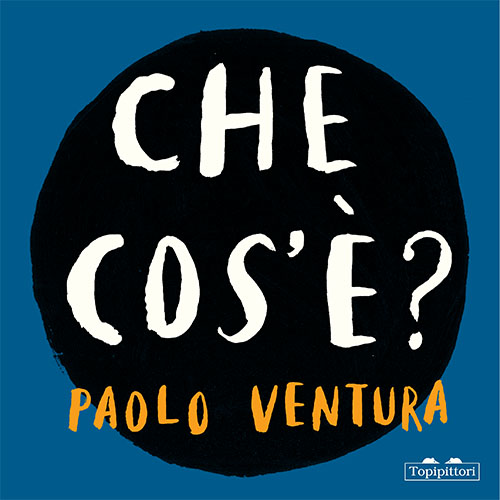
Che cos'è?

How many things can a circle be? It can be an eclipse, an eye, a porthole, a clown's nose... This is the first children's picture book by Paolo Ventura, artist of international renown, which plays with round shapes and invites little readers to change their perspective at every turning page. A board-book with strong personality and simple touch, made of riddles, questions and answers, with plenty of rhythm and surprise. [Text in Italian]
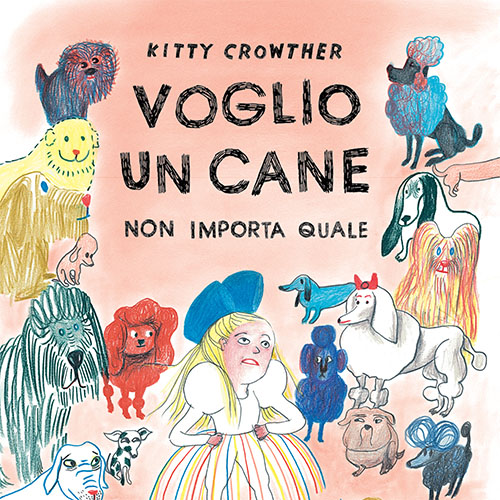
Voglio un cane

Millie hates two things: early mornings and school. Every day she begs her mother to get a dog. All her classmates have beautiful dogs, of all breeds, shapes and colours. Every day, Mum answers NO. But Millie doesn't give up and, finally, one morning the answer is YES! So they go looking for a dog at the kennel, and the choice is hard. She finds a strange creature, and she wonders what name she should give it. Will the girls like it? Oh, if only dogs could talk!
Another wonderful book by Kitty Crowther. [Text in Italian] 

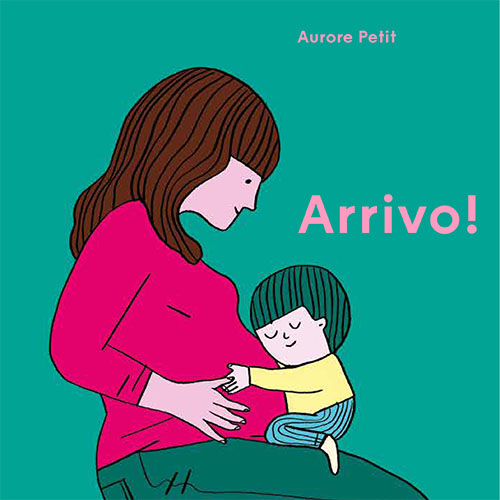
I'm coming!

After her first book about motherhood (Una mamma è come una casa), Aurore Petit tells the story of the second child coming to life, through simple yet universal topics like listening to her heartbeat, announcing her birth to her little brother, finding new roles in the family. The narrator's voice is that of the baby to be born, who discovers the world through sounds and sensations. Text and illustrations offer a double level of reading: words describe what the baby's feeling in her mother's womb, pictures show what's happening outside. [Text in Italian]

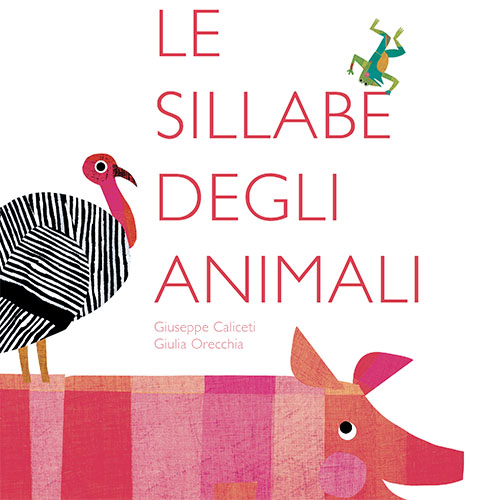
Le sillabe degli animali

Another thrilling nursery rhyme by the master of words Giuseppe Caliceti for our collection 'Linguacce', to invite children to play with language and grammar. This time it's all about syllables, which form an extraordinary zoo of shapes and colours through Giulia Orecchia wonderful illustrations. A book that is visual and verbal joy to play, sing and learn how to spell.

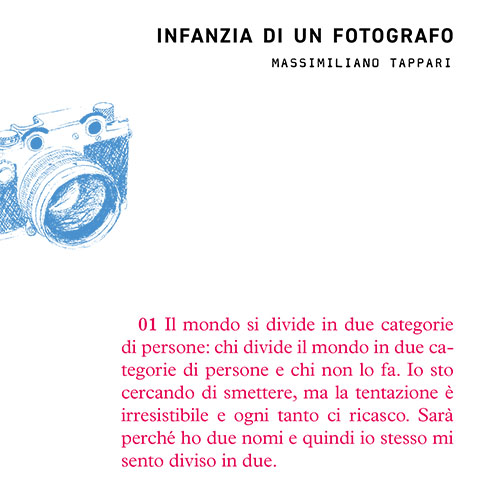
A photographer's childhood

Massimiliano Tappari, photographer and writer, inaugurates the new collection 'I topi immaginari': books made of short, or very short, stories, episodes, memories, words and figures that turned out to be fundamental for the construction of the author's imagination and self. A photographer's childhood focuses on vision, which is being trained from his first months of life to record images, light and shadow, sensations and details.

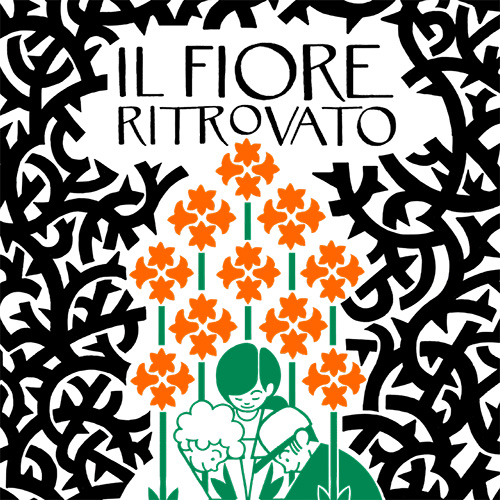
The missing flower

Three children in a wild garden find the house of the grumpy old man who cut down their beloved tree. Triggered by an old photo that reveals the man's past, the children conceive an extraordinary plan to cure him from the heavy sadness weighing on his heart. A wordless book that celebrates the salvific virtues of nature, and the friendship between grown-ups and children as a source of regeneration on the one hand, and as a fundamental step of life on the other. A story told just through pictures by Jeugov, an extraordinary debut.

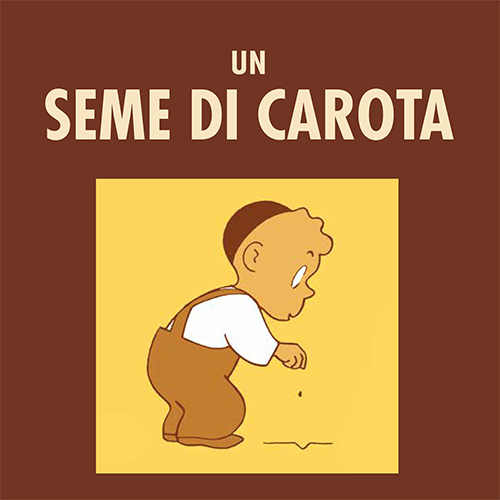
The carrot seed

A boy has planted a carrot seed. His mother, his father and his brother tell him it won't grow. But when you're a child, there are some things you're absolutely sure about, and he knows the seed will bear fruit. So, every day, he pulls the weeds out, waters the soil and awaits. First published in 1945, and never reprinted ever since, this small book by two masters of children's literature, Ruth Krauss and Crockett Johnson, finally comes back to life, to teach us that hope and trust need to be cultivated day by day. [Text in Italian]

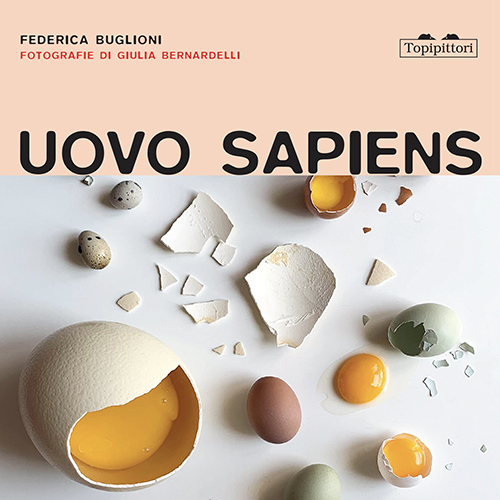
Uovo sapiens

What is a workshop? A physycal or a mental space? How do you conceive and set a scientific or creative workshop? How do you choose your material? What should you do, observe, direct, correct? What's more important for you, the work in progress or the goal? This essay by Federica Buglioni, author of Naturalisti in cucina ("scientists in the kitchen"), explores workshop as a powerful instrument for educational purpose, namely at school, focusing on food, a tool all children have access to. Photos by Giulia Bernardelli illustrate texts and activities. [Text in Italian] 

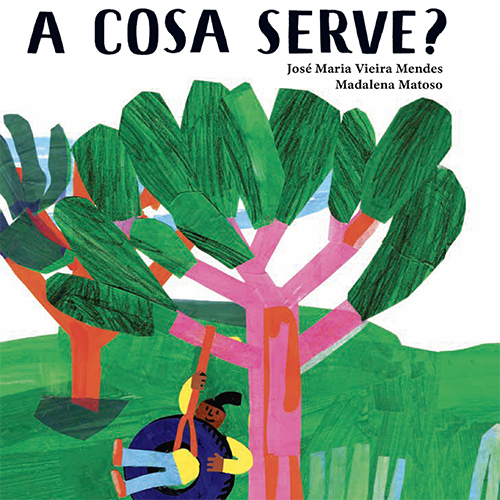
What is this for?

When you look at something, do you ever wonder "what is it for"? And if you do, have you ever wondered if everything has a purpose? Some things have a specific function, others many. There are things of no use, and yet they're very important. José Maria Vieira Mendes and Madalena Matoso created a philosophical book that will help you to find answers and, more important, to ask questions. Because asking is the first step for kids to understand what surrounds them and to feed their intelligence.

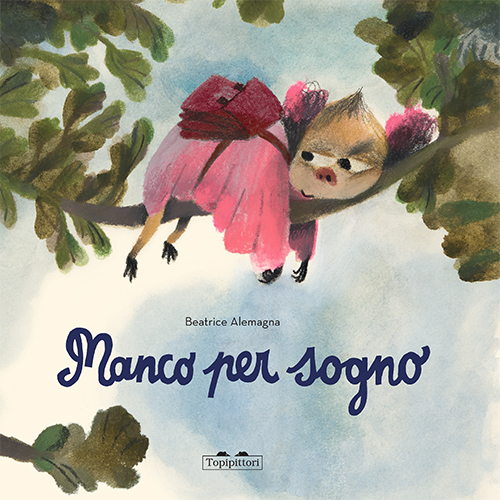
Never, not ever!

Pasqualina: three years old, two hairy wings and a firm conviction: No school. Never, not ever! A book by Beatrice Alemagna dedicated to children who face their first day in school. With sharpness and humour, Beatrice surprisingly turns the situation upside down. Pasqualina's parents have suddenly become very small and fearful, she has no choice but taking them to school with her. Forced to forget her tantrums and fears, she lives fully this new adventure. A delightful and wise story which focuses on the feelings and contradictions of childhood, age of great discoveries and changes.